

Many of us are simply not prepared to put ourselves out for ‘human consumption’. With the feeling that to show our vulnerabilities or our true authentic self, it will only lead to criticism or being ‘marked down in price’.
In reviewing some articles from the Grocery sector, by simply changing a few words in the following paragraphs you could be describing many working environments.
Guy Singh-Watson, founder of retailer Riverford, which sells fruit and vegetables with broader specifications than supermarkets, says that increased demand for wonky food can be a force for good because it challenges the expectations consumers have of cosmetic perfection in their fruit and vegetables
“Farmers are told they have to be more productive, which means using more pesticides, fertilisers and land that would’ve otherwise been space for wildlife,” he says. “This means adding way more fertiliser than required. Avoiding the risk of something falling out of specifications is a major driver of pest usage. Uniformity doesn’t exist in nature.”
Speciality Food Magazine
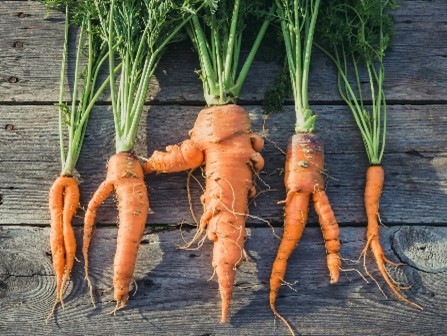
According to The Grocer “It estimated that £30m-worth of the 2015 UK strawberry and lettuce crops went to waste due to continuing specification issues such as size and colour.” I don’t feel there is any more needed to be said in light of the increased awareness of DE&I over recent years.
More recently (Oct 2021) they reported the Tesco had announced that its food waste scheme has saved 50 million packs of fruit and vegetables from going to waste. The initiative, which was called Perfectly Imperfect, offers customers wonky food that would otherwise be at risk of going to waste. Since launching in 2016, the total weight of ‘Wonky’ fruit and veg they have sold is 44,000 tonnes.
A piece of ‘wonky veg’ adds enjoyment, creates talking points and once given the chance to be seen, often make the ‘norm’ look somewhat boring and a little less exciting and predictable.

It is also documented that the goodness derived from these ‘less than perfect ranges’ is often higher in nutritional value. In addition to adding a unique perspective that would perhaps have been missed.
In the future, I hope that we work towards making it easier to show our nobbles and bumps, and in doing so it not just accepted but encouraged.